
 Image 1 of 1
This session is scheduled for June 7, 14, 21, 28 2-4PM PST (that’s Los Angeles time).
Registration is $320 and includes all four sessions.
Participants gather via Zoom.
Throughout history, humans have attempted to visualize time through a multitude of shapes–spiral, line, circle, horizon, grid, tunnel, hole, void, abyss, and more. Ancient timekeeping devices, measurements of deep time, and tracking seasons and cycles are further attempts to understand our place within time, while experiences like calendar synesthesia, a disorienting nap, or an overloaded schedule remind us of the impossibility of grasping time.
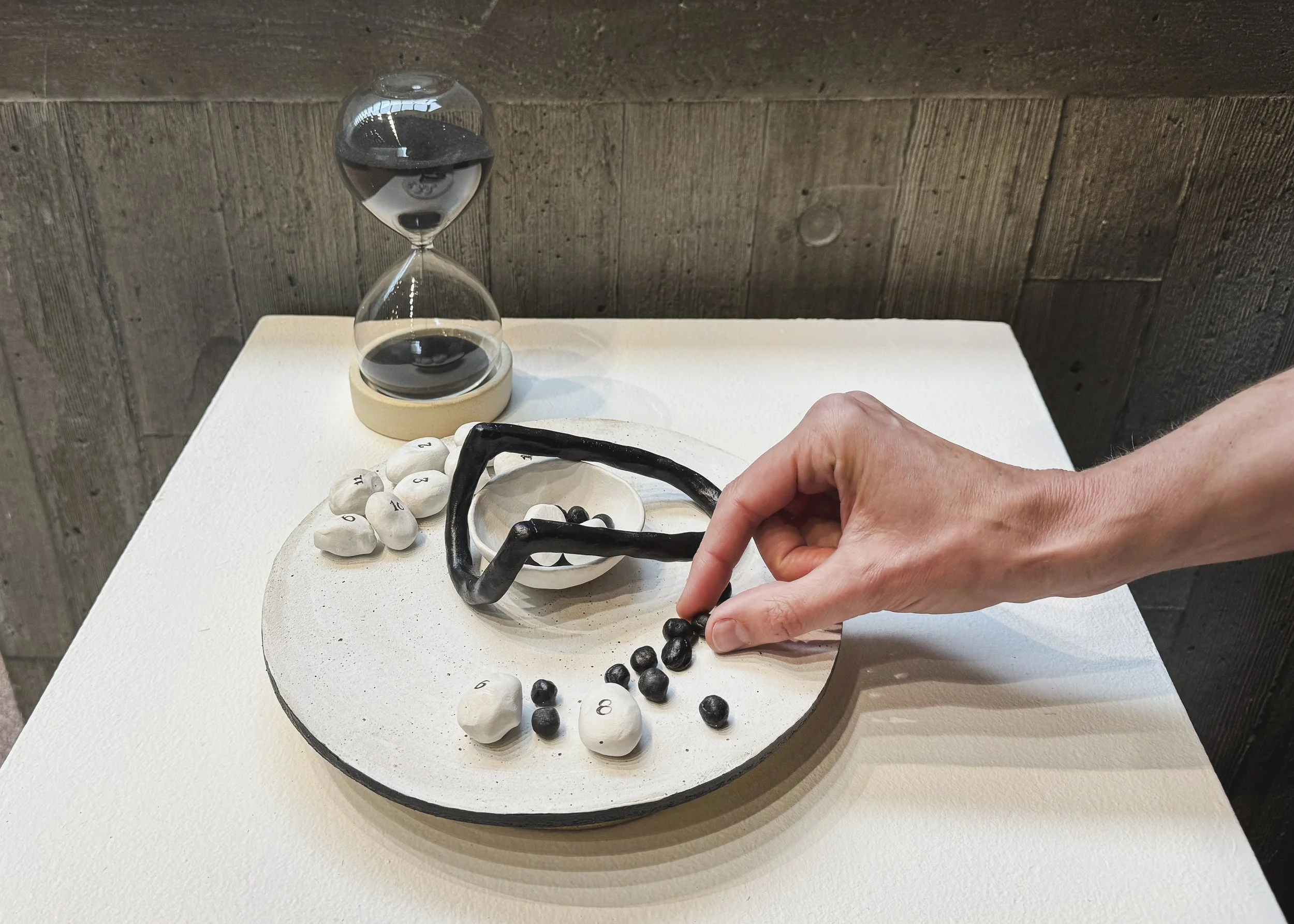
Ceramics is the original time-based medium. Geologic and studio processes exist on their own time scales. Clay particles are formed over millions of years as granite weathers. After we reform that material in our hands, clay requires time to dry, kilns take time to fire, and glazing always takes longer than you think. Cracks, glaze mishaps, and explosions are all evidence of mismatched calibration to clay’s time. The longer one works with clay, the easier it is to understand clay’s time-based language. Time shapes us and what we create, but what shape does time take?
More details can be found here.
This session is scheduled for June 7, 14, 21, 28 2-4PM PST (that’s Los Angeles time).
Registration is $320 and includes all four sessions.
Participants gather via Zoom.
Throughout history, humans have attempted to visualize time through a multitude of shapes–spiral, line, circle, horizon, grid, tunnel, hole, void, abyss, and more. Ancient timekeeping devices, measurements of deep time, and tracking seasons and cycles are further attempts to understand our place within time, while experiences like calendar synesthesia, a disorienting nap, or an overloaded schedule remind us of the impossibility of grasping time.
Ceramics is the original time-based medium. Geologic and studio processes exist on their own time scales. Clay particles are formed over millions of years as granite weathers. After we reform that material in our hands, clay requires time to dry, kilns take time to fire, and glazing always takes longer than you think. Cracks, glaze mishaps, and explosions are all evidence of mismatched calibration to clay’s time. The longer one works with clay, the easier it is to understand clay’s time-based language. Time shapes us and what we create, but what shape does time take?
More details can be found here.